
Cho Lab Presents Exciting Research Works at AMS 2026

Date: 01/30/2026
The Cho Lab participated and presented at AMS 2026, held in Houston, Texas, from January 25–29, 2026. The American Meteorological Society (AMS) is a leading scientific platform focused on promoting research and applications in weather, climate, and water sciences.
Three Cho Lab members- Kathleen Shank, Harisankar Manoj, and Hrishant S. Sharma- presented posters showcasing their ongoing research at the conference. Beyond the poster sessions, the team spent time connecting with collaborators, learning about related work, and engaging with scientists who apply research findings in real-world settings.
Check out the posters below to explore the exciting research works presented on behalf of the Cho Lab at AMS 2026.
Posters & Abstracts:
Kathleen Shank
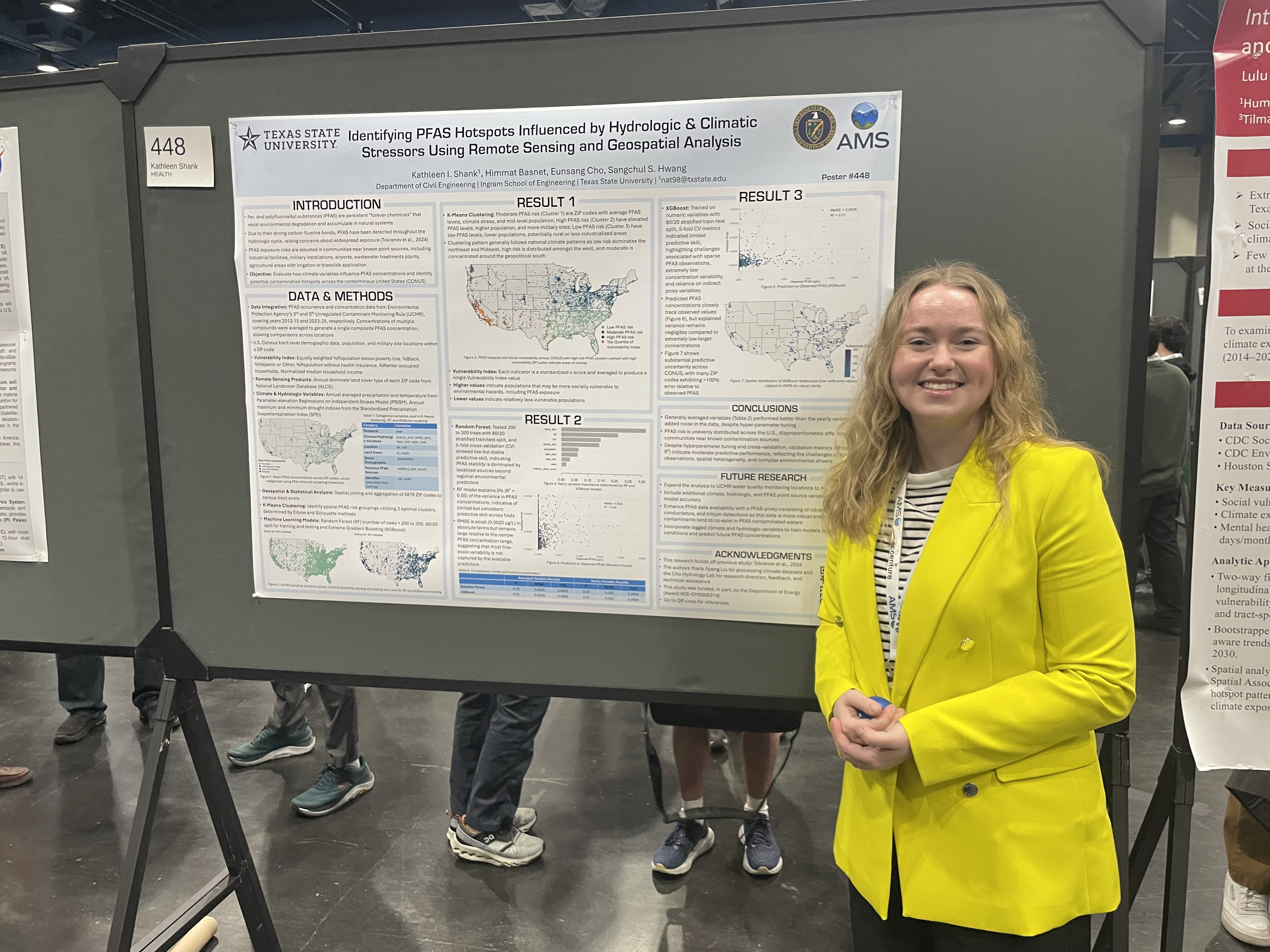
Title: Identifying PFAS hotspots influenced by Hydrologic and Climatic Stressors Using Remote Sensing and Geospatial Analysis
Per- and polyfluoroalkyl substances (PFAS) are persistent synthetic compounds linked to adverse human and ecological health effects. These substances are not easily broken down in nature and can get trapped in hydrologic cycles. Due to their bioaccumulating quality, they pose long term health effects particularly to those residing in communities in proximity to major contamination sources, such as industrial parks, large scale airports, intensive agricultural irrigation or biosolids application sites, and military bases. This study utilizes large-scale hydrologic modeling, remote sensing, and geospatial analysis to identify potential PFAS hotspots in the United States (U.S.) Leveraging data from U.S. census tract, industrial facilities, military installations, and wastewater treatment facilities; we assess population vulnerability and potential exposure pathways. Remotely sensed land use and vegetation indices were utilized to evaluate the potential for contaminant transport from landscape characteristics. Results highlight clusters of high-risk areas in proximity to PFAS point sources and correlate to climate stressors such as drought and extreme precipitation, leading to increased PFAS exposure risk and transport uncertainties. Our analysis underscores the uneven distribution of PFAS risk across vulnerable communities located near point sources, compounded by climate-driven stressors. Through a combination of geospatial modeling and remote sensing, this analysis provides a framework for identifying key PFAS hotspots, environmental disparities, and guidance for future monitoring efforts.
Poster:
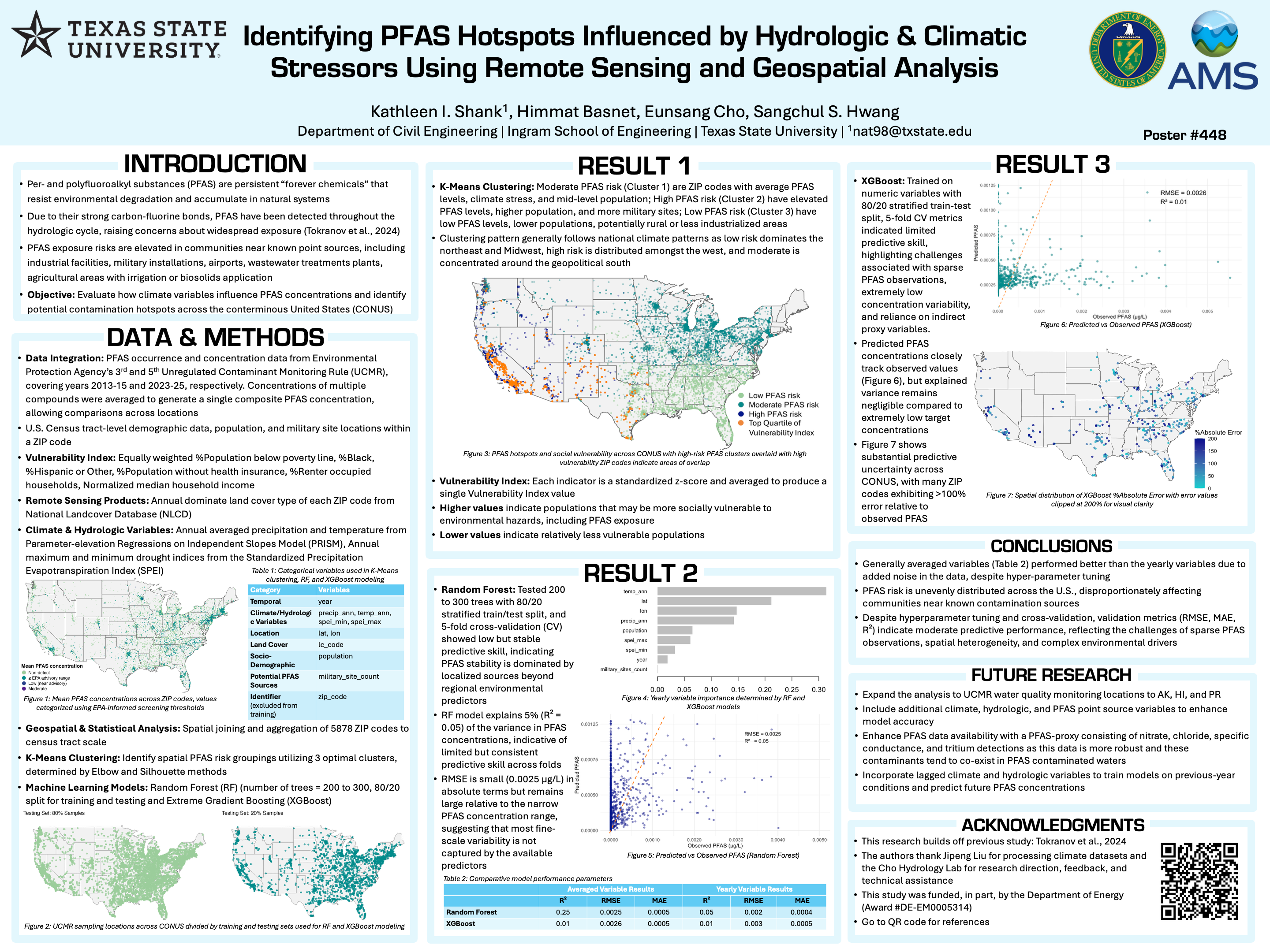
After many long nights, last-minute preparations, and experiencing my first Texas 'snowmageddon,' it was especially rewarding to present my research to the welcoming and encouraging AMS community. The conference offered a great opportunity to meet and network with scientists working in research areas I’ve been involved in before, as well as topics that I’m personally eager to learn more about.
Harisankar Manoj
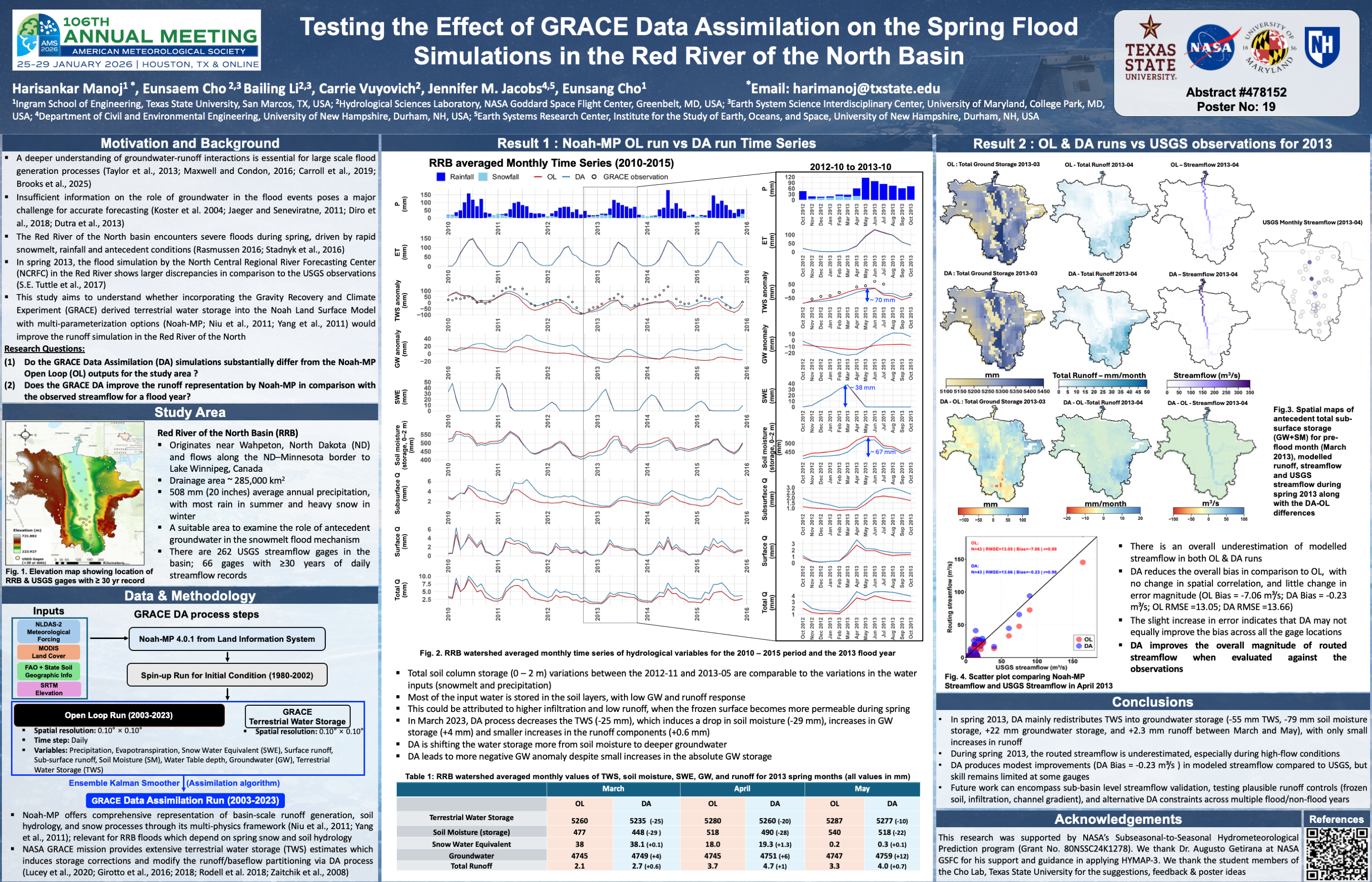
Title: Testing the Effect of GRACE Data Assimilation on the Spring Flood Simulations in the Red River of the North Basin
Abstract Snowmelt drives major floods in the northern parts of the continental U.S. and Canada, but the contribution of groundwater to these events remains under-explored. This study evaluates whether assimilating groundwater conditions into a land surface model enhances snowmelt flood predictability in the Red River of the North Basin; an area where spring snowmelt floods are a regular occurrence. We first simulate streamflow using the Noah Land Surface Model with Multi- Parameterization (Noah-MP) model coupled to the Hydrological Modeling and Analysis Platform (HyMAP) routing model, comparing results with USGS observations during historical peak snowmelt flood years to quantify baseline performance. To better account for groundwater dynamics, we then assimilate the Gravity Recovery and Climate Experiment (GRACE)‑derived terrestrial water storage anomalies into the Noah-MP, leveraging the NASA Land Information System (LIS) framework. The resulting streamflow simulations are evaluated against both the open loop outputs and observational records. We hypothesize that incorporating groundwater information via GRACE assimilation will reduce timing and volume errors in peak flood predictions and enhance spring flood‑forecasting skill at seasonal and subseasonal scales. Keywords: Groundwater; Data assimilation; snowmelt floo
Poster:
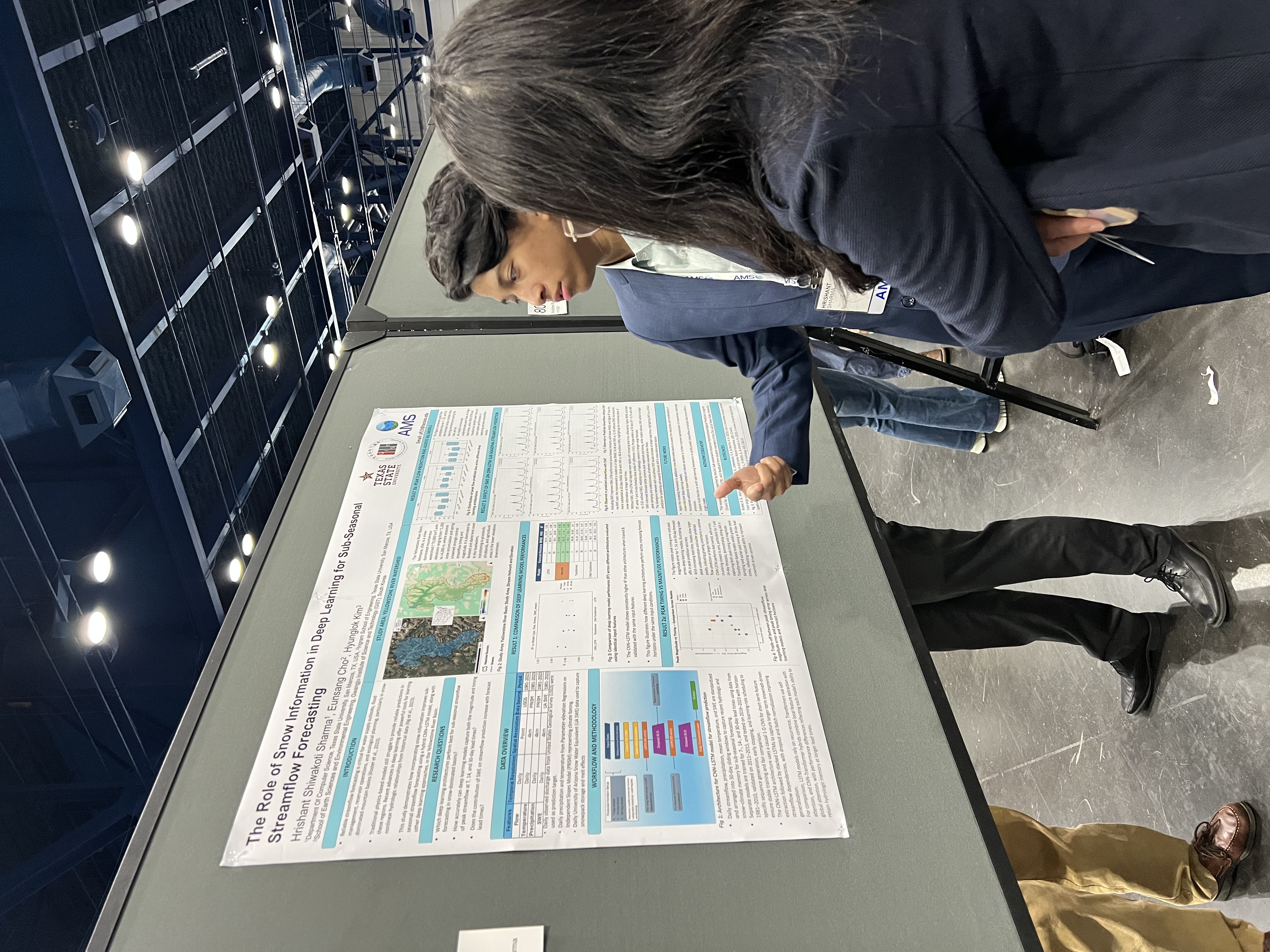
Hrishant S. Sharma
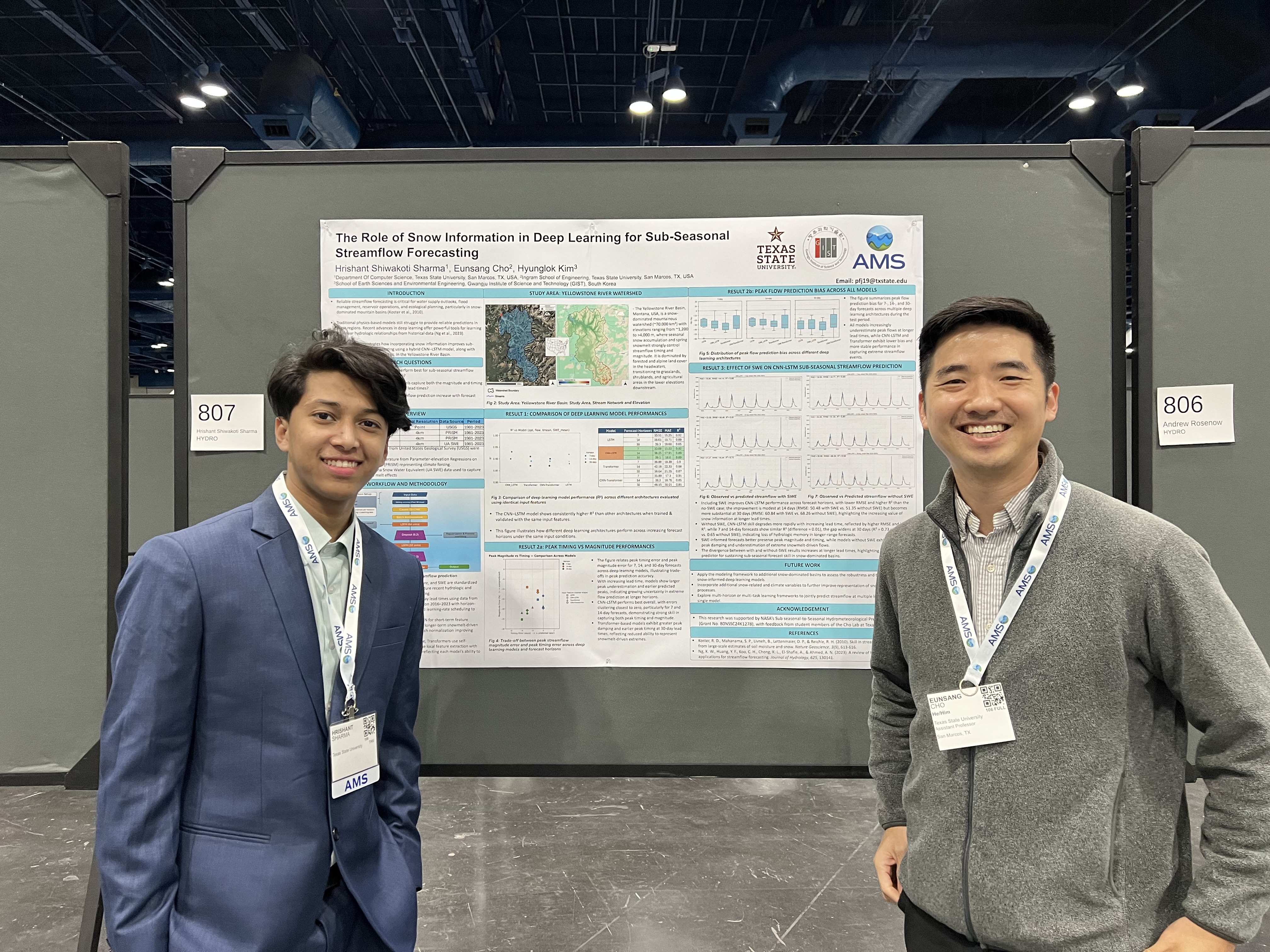
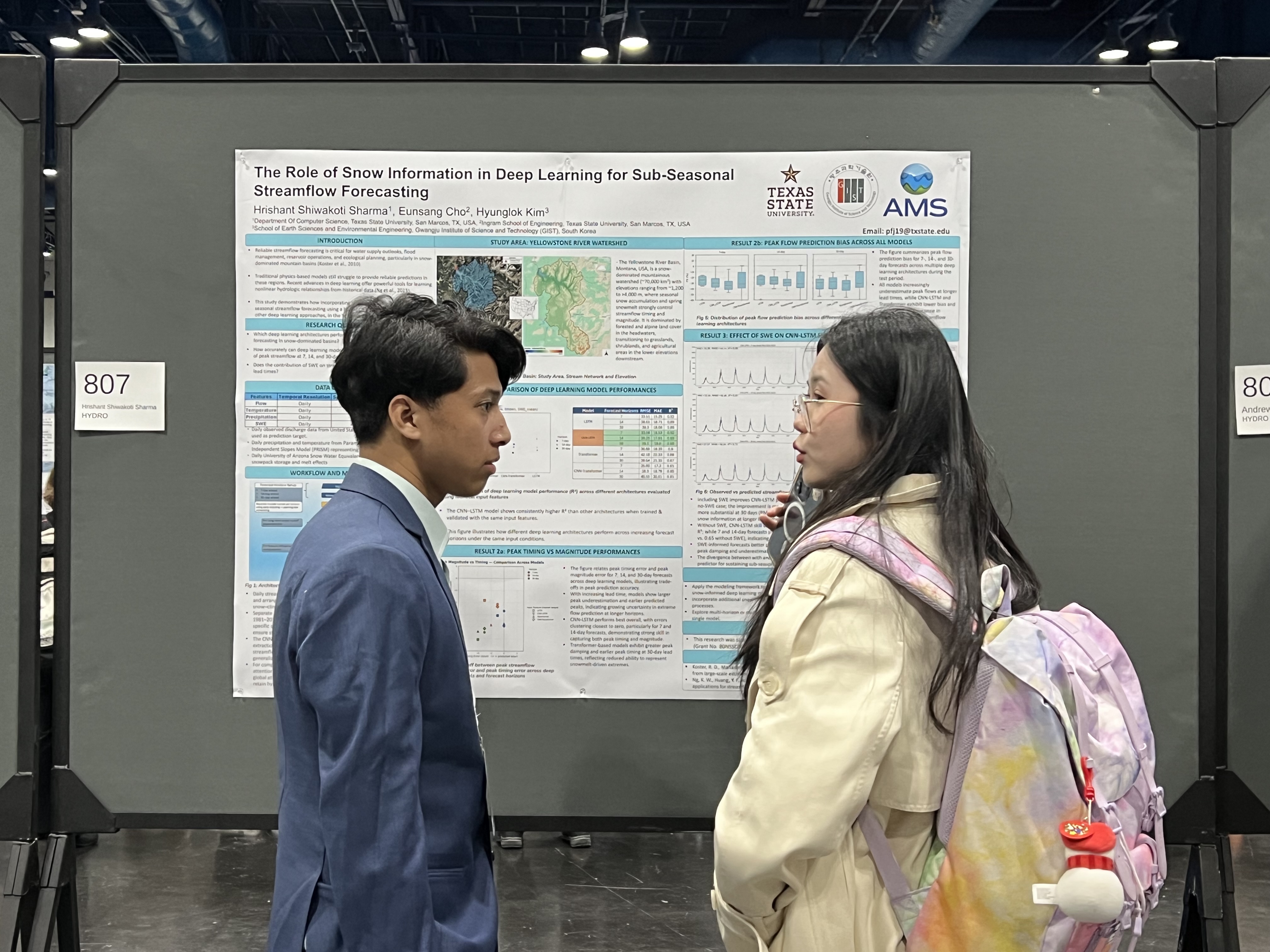
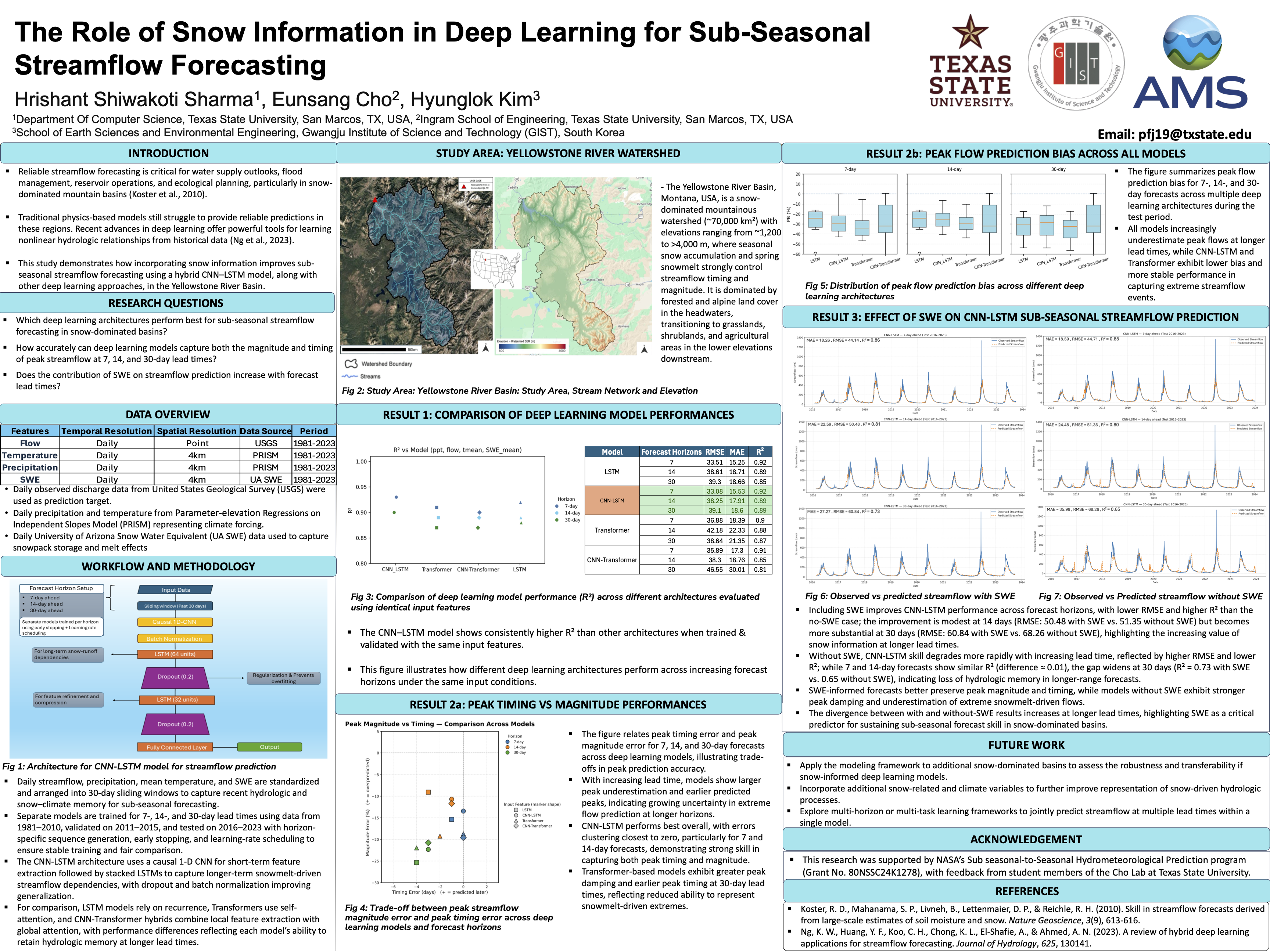
Title: The Role of Snow Information in Deep Learning for Sub-Seasonal Streamflow Forecasting: A Case Study in the Yellowstone River Basin
Abstract: Reliable streamflow predictions are vital for flood management, reservoir operations and ecological planning, especially in snow-dominated basins. Traditional physics-based hydrologic models have advanced considerably, but they still struggle to provide reliable predictions in snow-dominated regions. This challenge is becoming more pressing as climate change shifts precipitation patterns and alters the timing of snowmelt, creating a growing need for new forecasting approaches. In this study, we developed a hybrid deep learning model that combines a one-dimensional convolution neural network (CNN) and long short-term memory (LSTM) to predict daily streamflow in the Yellowstone River Basin. The CNN module identifies short-term patterns from the past 30 days of data, while the LSTM captures long-term dependencies. The model uses daily streamflow, precipitation, temperature, and snow water equivalent (SWE) data from 1981-2023. We tested multiple versions of the model—one that included/excluding snow variables such as SWE and snowmelt —to better understand the role of snow variables in prediction skill. To improve stability and efficiency, we applied techniques such as early stopping and adaptive learning rates. Results show that the hybrid CNN-LSTM approach achieves higher forecast accuracy when snow variables are included, particularly for short lead times (up to 7 days ahead), and maintains useful predictive skill at longer lead times of 14 and 30 days. These findings underscore the potential of deep learning approaches and highlight the importance of incorporating snow information when forecasting streamflow in mountain basins
Poster:
I am proud of the Cho Lab team for an excellent start to the year at the AMS Conference. It was great to see our students share their work, engage with the community, and represent the lab so well.
Other Images: