
Momin Presents at TRB 2026
Date: 01/31/2026
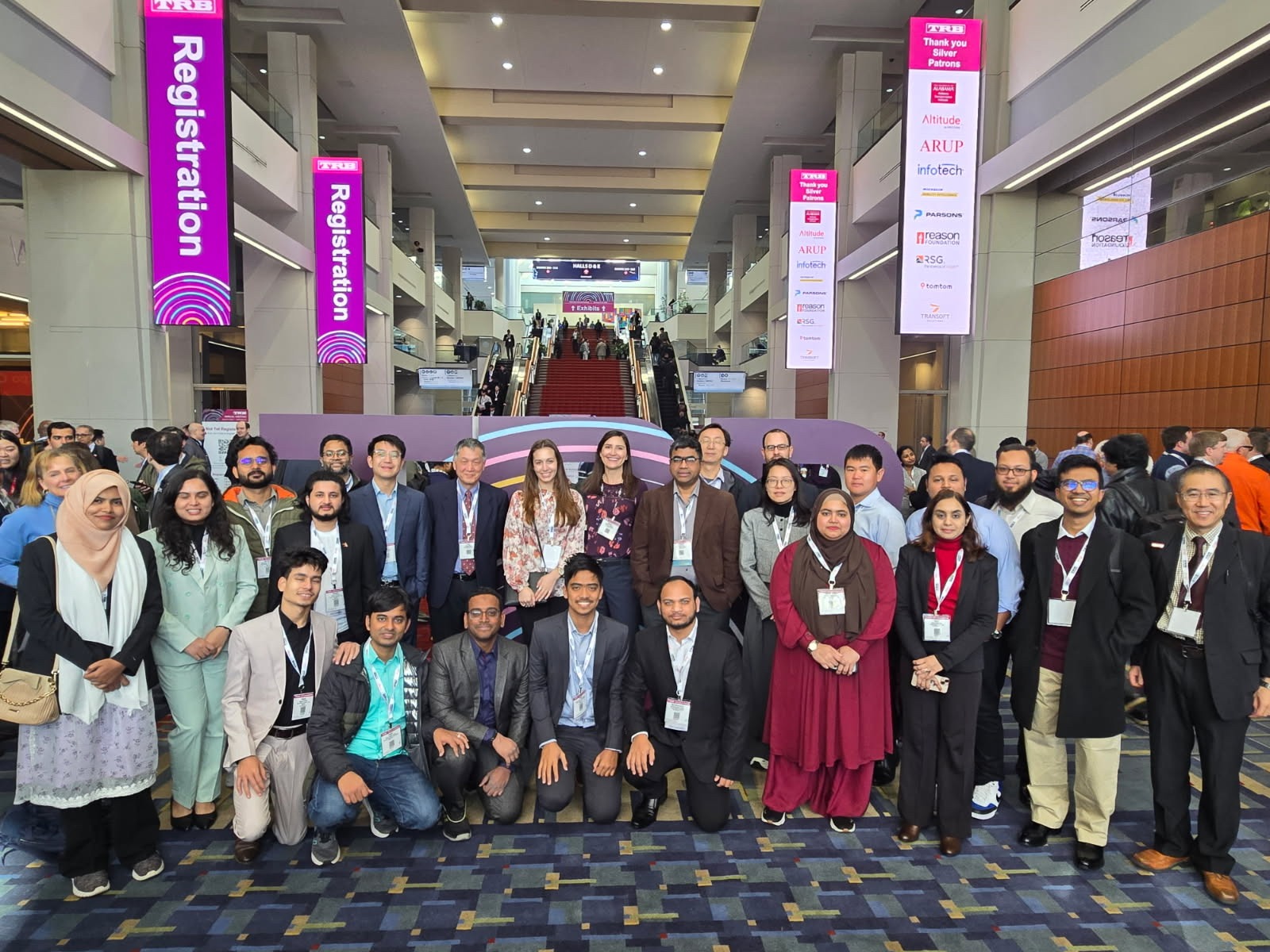
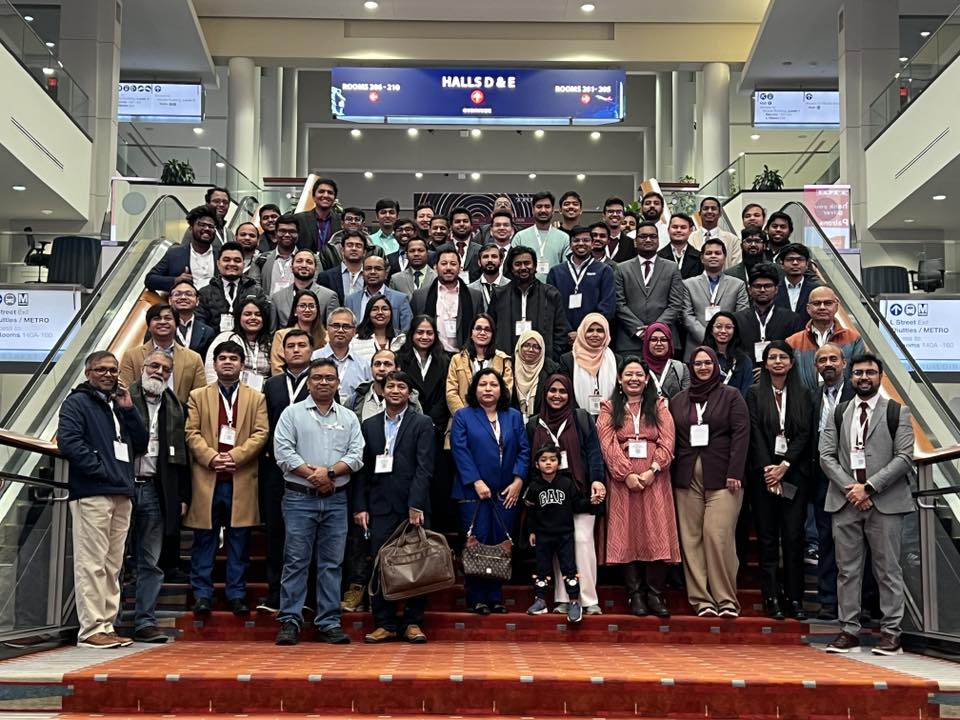
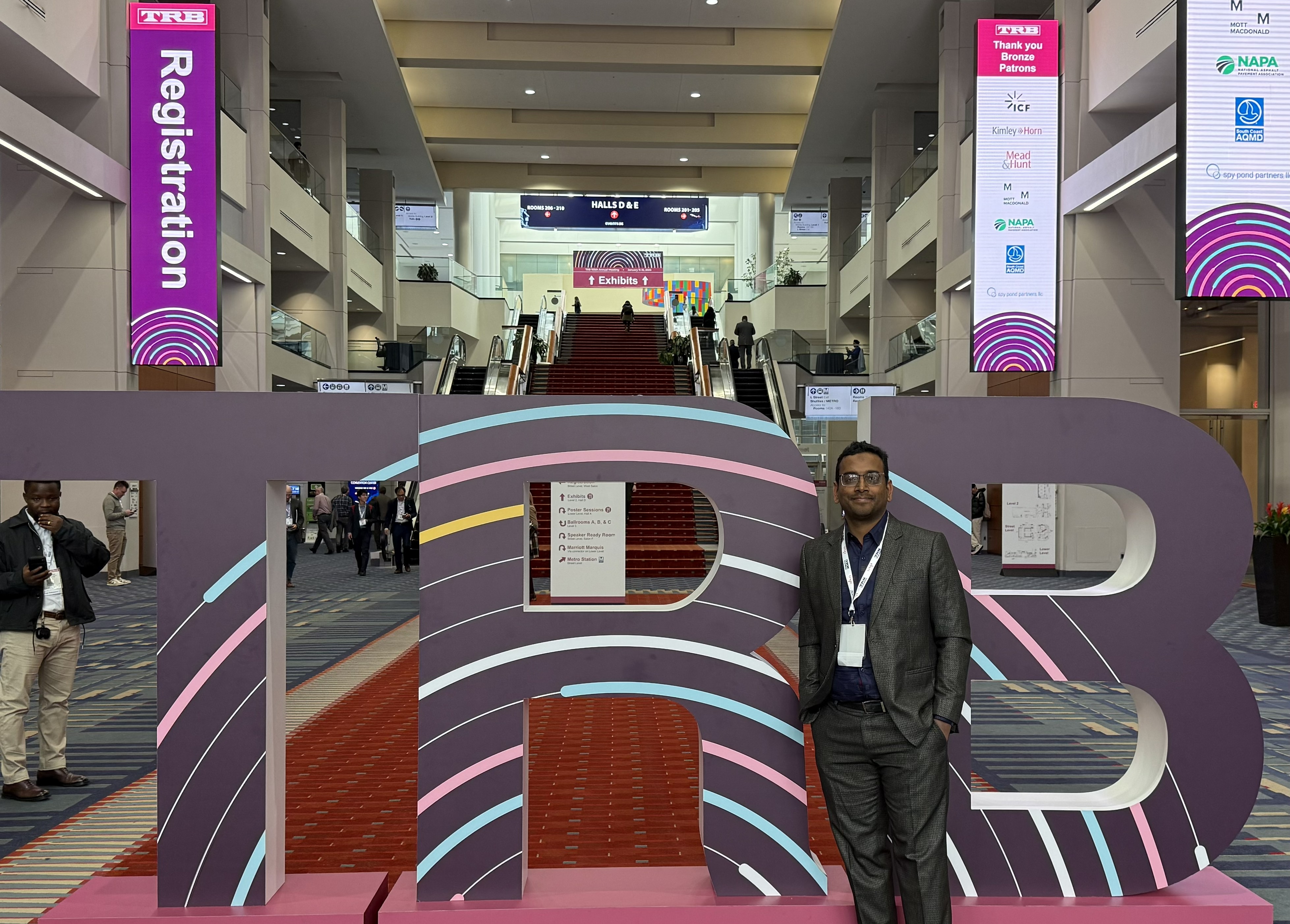
Cho Lab is proud of the participation of Md Shah Mominul Islam Momin at the 2026 Transportation Research Board (TRB) Annual Meeting, held January 11–15 in Washington, D.C. TRB is one of the world’s premier gatherings for transportation research, policy, and practice, bringing together scholars, engineers, planners, and decision-makers from across the globe.
At TRB 2026, Momin presented two poster papers, and actively engaged with researchers and professionals in discussions on coastal resilience, flood risk assessment, and methodological rigor in transportation-related climate research.
Research Presentations
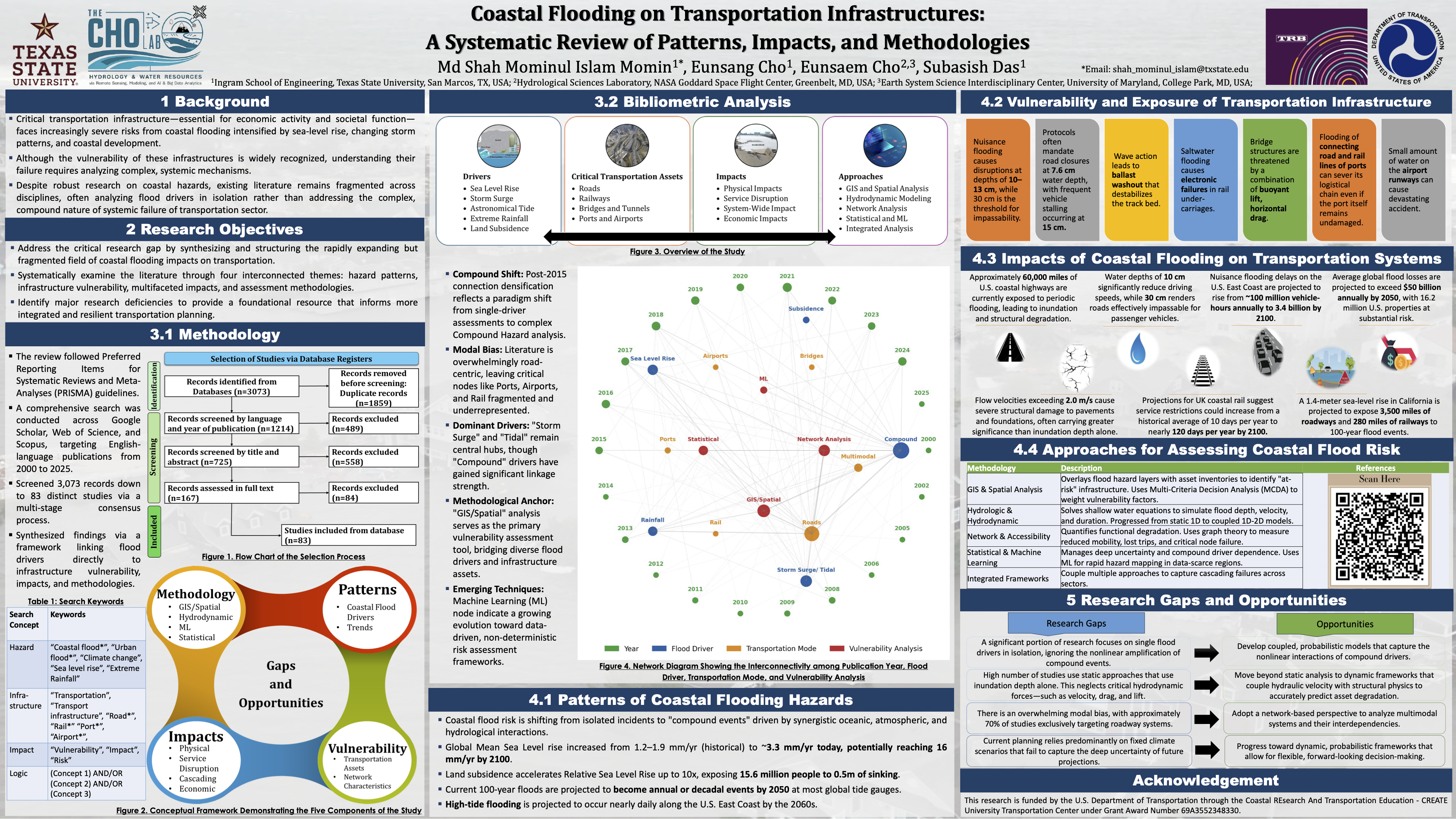
Coastal Flooding on Transportation Infrastructures: A Systematic Review of Patterns, Impacts, and Methodologies
Critical transportation infrastructure, which underpins societal well-being and economic activity, faces a severe and escalating threat from coastal flooding due to the compounding pressures of climate change and sea-level rise. Although the vulnerability of these low-lying networks is well established, the scientific literature addressing their complex and often systemic failure mechanisms remains fragmented across disparate disciplines, creating an urgent need for a systematic synthesis to guide resilient adaptation. This study addresses this gap by conducting a systematic literature review, following Preferred Reporting Items for Systematic Reviews and Meta-Analyses (PRISMA) guidelines, to synthesize and structure the findings from 83 peer-reviewed articles published between 2000 and 2025. The review reveals two principal findings: first, a clear paradigm shift from single-hazard analyses to a more holistic understanding of compound events, where the interaction of multiple drivers like storm surge and rainfall is critical; and second, that infrastructure vulnerability is a systemic issue, rooted not just in physical exposure but in network topology and deep interdependencies with other sectors that lead to cascading failures. These findings underscore the necessity of developing integrated, multi-hazard modeling frameworks to inform more robust, evidence-based adaptation strategies and enhance the resilience of critical transportation infrastructure.
Poster:
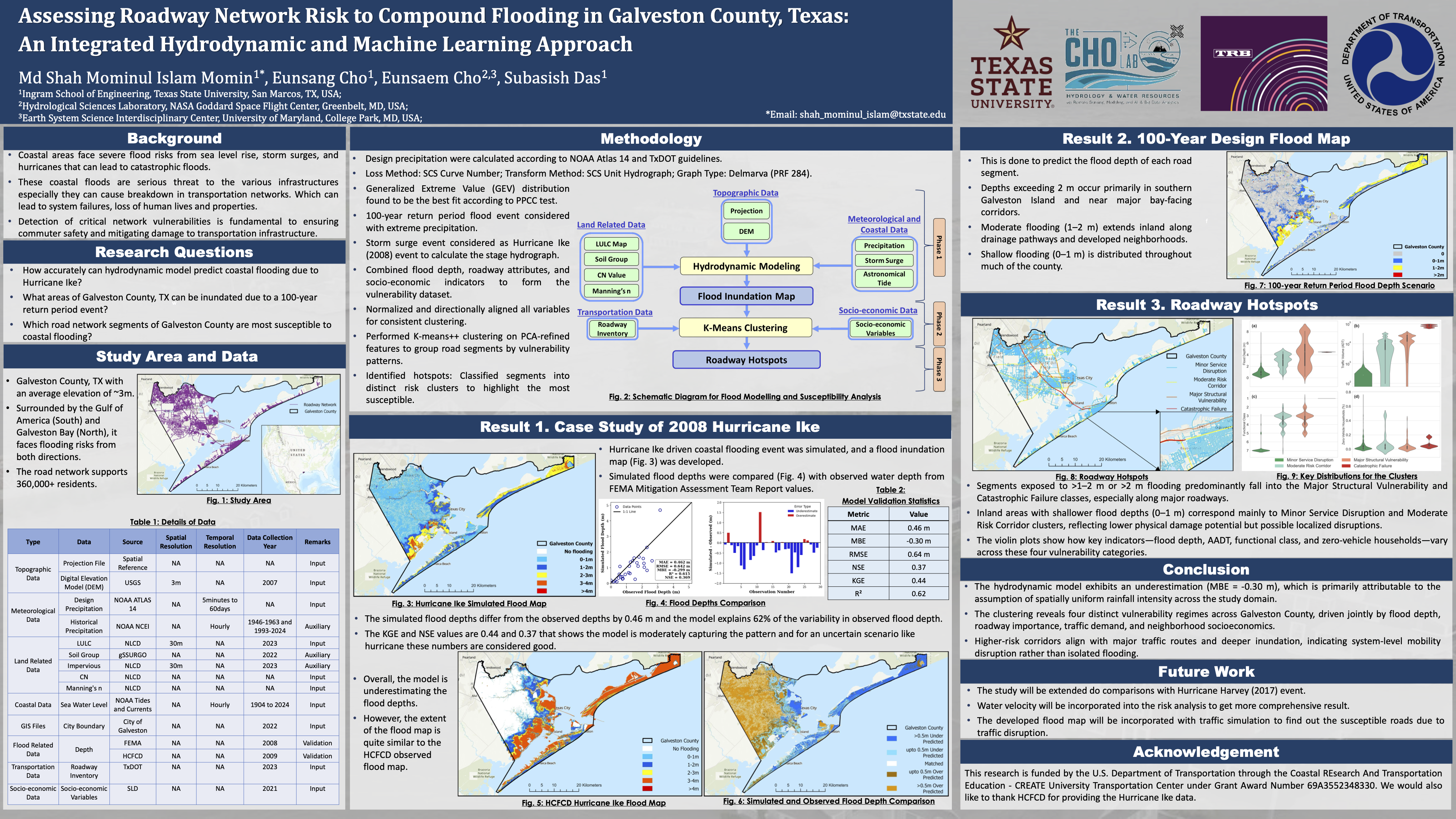
Assessing Roadway Network Risk to Compound Flooding in Galveston County, Texas: An Integrated Hydrodynamic and Machine Learning Approach
Coastal transportation networks are increasingly sensitive to compound flooding, where storm surge and heavy precipitation occur concurrently. Traditional flood risk assessments often analyze these hazards in isolation, potentially underestimating the true risk to critical infrastructure. This study presents an integrated framework to identify and classify roadway network risks in Galveston County, Texas, a region highly susceptible to hurricane impacts. A coupled 1D/2D hydrodynamic model (HEC-RAS) was developed and validated against data from 2008 Hurricane Ike, achieving a reasonable model fit (R² = 0.615) with observed high-water marks. The validated model was then used to simulate a 100-year, 24-hour compound flood event, using design precipitation from NOAA Atlas 14 and a representative sea-level boundary condition. The resulting inundation map was integrated into a GIS environment with a TxDOT roadway inventory and a comprehensive socio-economic database. A k-means clustering algorithm was employed to analyze road segments based on flood depth, road characteristics, and socio-economic variables, classifying them into four risk categories. The results spatially identify critical and risky roadway segments, revealing that the combined effects of flood hazards and socio-economic factors create complex risk patterns. This framework provides a data-driven, replicable methodology for transportation agencies and emergency managers to prioritize adaptation measures and enhance the resilience of coastal transportation systems.
Poster:
Beyond his presentations, Momin attended multiple poster and lecture sessions, participated in the TTI TRB Reception, and connected with researchers from universities, government agencies, and policy institutions. He also engaged and strengthened professional ties within the Texas State University network.
A memorable experience of presenting research, building collaborations, and engaging with the global transportation research community. I sincerely thank Dr. Cho for the opportunity and my collaborators for their guidance in strengthening the rigor of my research.
- Momin
The Cho Lab is proud to see our students actively engaging with the global transportation research community. Experiences like TRB strengthen both research excellence and professional growth.